
How much time would you say you spend on your smart phone? Too much, maybe?
Surely, any practitioner would advise you to steer clear from more screen time on your phone, but there are apps that can make screen time worthwhile. Across the health domain, there has been an increased interest in digital tools and the manner in which they could potentially deliver quality service and care. For psychiatry and mental health, there are a myriad of apps that portable and accessible therapies, such as tracking mood, mindfulness exercises, and so on!
As I’ve mentioned in my first blog post (and quite frankly in every subsequent blog post), individuals impacted by mental illness often face a pervasive form of discrimination and stigma that decreases their likelihood to seek help. Surely, other factors play a role here too: lack of financial means, lack of support system, lack of available treatments and/or personnel.
Let’s take a closer look at these reasons, shall we? Clinical care can be emotionally and physically taxing –interventions, such as psychotherapy and medication, within a wide array of settings can be overwhelming. Without the limitations of travel, cost, or coordination of care, it would appear that the digital delivery of the aforementioned methods, particularly apps based off of the efficacy of cognitive behavior therapy (CBT), bridges the gap among the disparities in mental health care. Nonetheless, the potential of these mobile apps does not come without its challenges.

The majority of the research explains that mental health apps should not replace traditional therapy, but they can be effective supplement to it. In essence, these apps allow individuals with mental illnesses to stay connected outside of the work and progress they make within their respective treatments. The American Psychiatric Association is also hard at work! Researchers have created a nifty app evaluation model in order to distinguish helpful apps from the ineffective, harmful ones. They have posed the following five questions to help patients make a more informed choice of their app usage. This model can also be used by clinicians and psychiatrists to make the appropriate recommendations if necessary.
To this end, the following three apps are mainly based on user feedback, and not due the the validity of any scientific claim or methods.
What’s Up

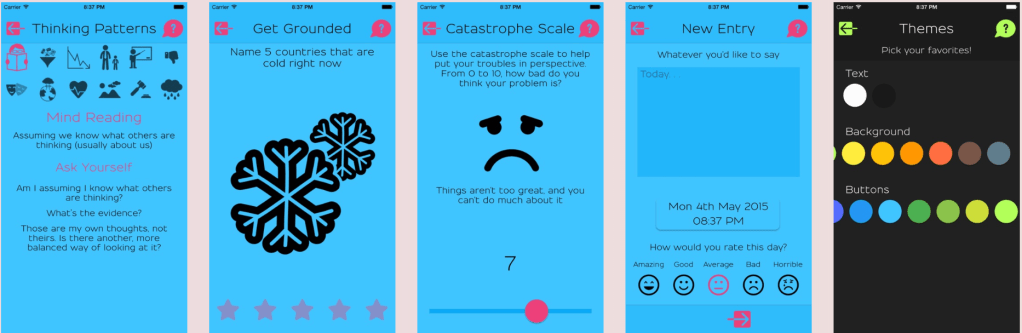
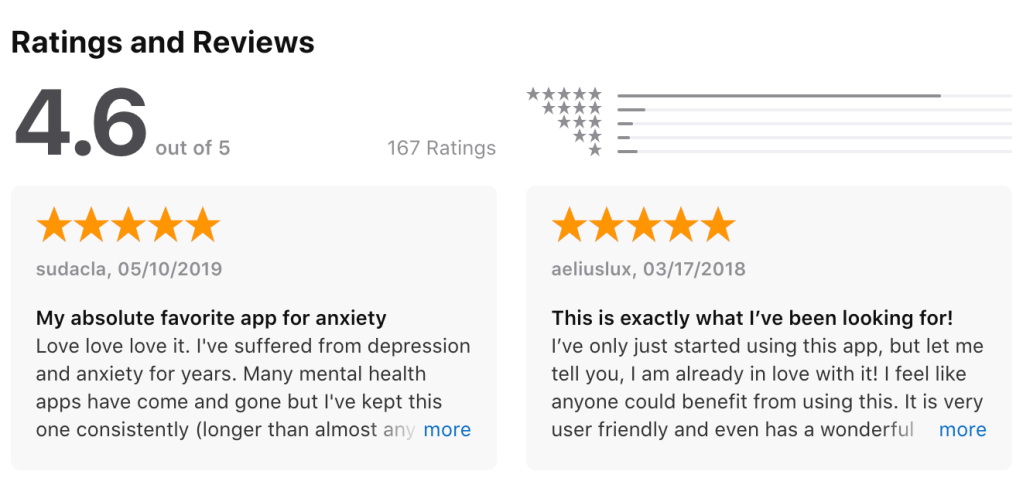
Developed by university student Jackson Tempra, What’s Up is a free app* based off Cognitive Behavioral Therapy (CBT) and Acceptance Commitment Therapy (ACT), both evidence-based treatments for mental illnesses. It contains a positive and negative habit tracker to appreciate your good habits, and acknowledge those that are counterproductive. Cognitive re-structuring can ultimately allow individuals to deviate from negative automatic thoughts, and ameliorate any harmful attitudes regarding mental illnesses. By reversing the reality of self-stigma, we can ultimately encourage (rather than inhibit) individuals to seek help. In addition, the app also includes a comprehensive diary, paired with a feeling scale. Other cool features include a forum to connect with others, breathing techniques, and games to de-stress.
Find it here for iOS (iPhone or iPad compatibility only) and Android.
Moodpath

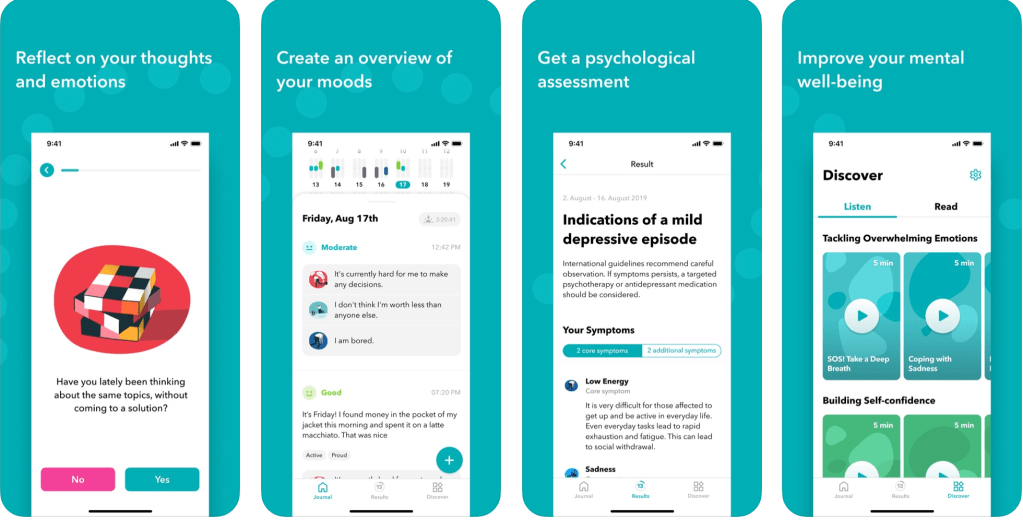
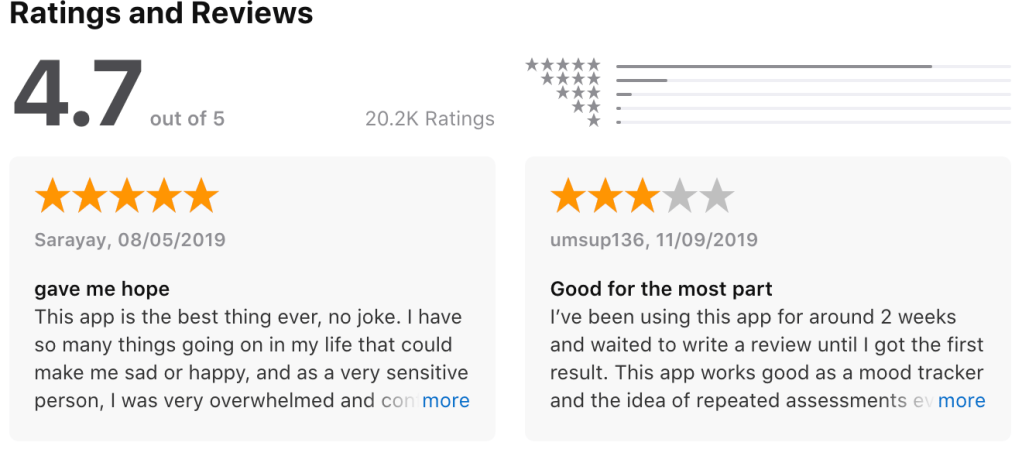
Developed by MindDoc, Moodpath, or rather your ‘mental health companion,’ is a free* mobile app helps those that may be suffering from depression or anxiety to identify and their mood on a day-to-day basis. One of the most popular mental health mobile apps, users answer to questions related to their emotional and physical well-being, track their thoughts in a mood journal, and can select from a library of mindfulness techniques.
The neat thing about Moodpath is the features act as some sort of ‘screening,” where it provides users with an evaluation every two weeks as to what extent symptoms may suggest. The user can then choose to have the app generate a letter to a doctor, making the initial consultation easier for both the affected person and medical professionals. Amazing, right? It makes the initial trepidation of approaching a clinician less daunting.
Find it here for iOS (iPhone and iPad compatibility only) and Android.
TalkLife
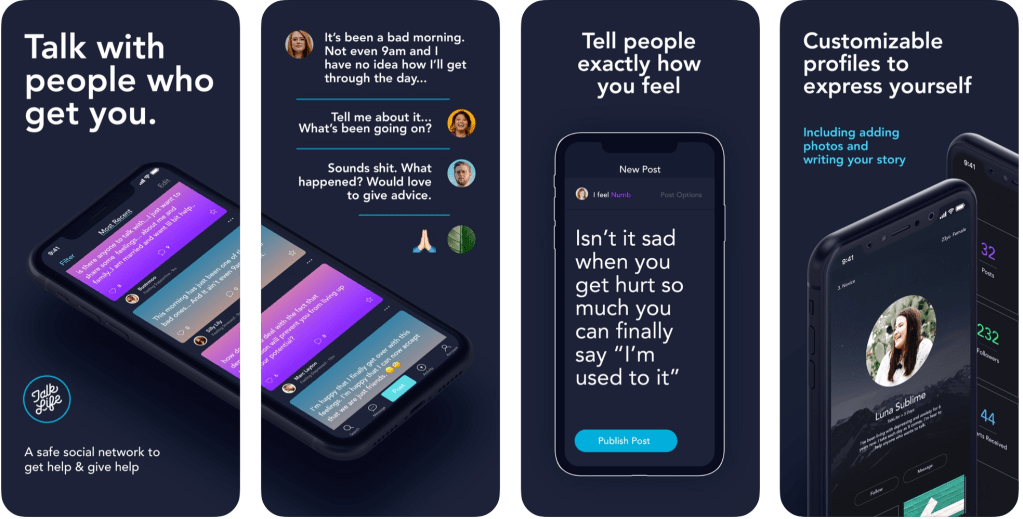
Created by TalkLife Limited Inc., this free app* builds safe communities for individuals to get mental health support at any time and at any place. As I’ve mentioned in a previous blog post, social support and solidarity can be a monumental for someone dealing with a mental illness. The communities don’t discriminate against any particular condition either – forums offer support for depression, anxiety, eating disorders, and so on. The app offers anonymity, confidentiality, and is moderated closely to safeguard the well-being of its users.
Find it here for iOS (iPhone and iPad compatibility only) and Android.
The * denotes that these apps have some optional in-app purchases.
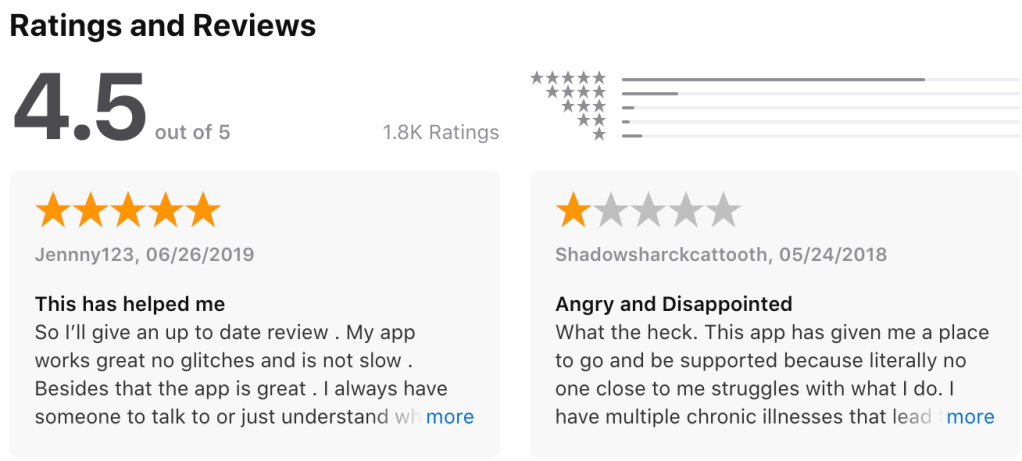
Take a look at this roundup of mental health thoughts, and comment your thoughts below. Whether you found them helpful or not, your feedback provides guidance to others that may be struggling.
So long, friends!
 Psych Central