Featured

The challenges and consequences of stigma in mental illness

Isolation is not the answer

There is hope, even when your brain tells you there isn’t.

— John Green

Is anxiety everlasting? Is this an intrusive thought or a hallucination? One of the most difficult things about mental illness is questioning yourself and reality, but it’s important to untangle your feelings and be confident to ask questions – even if the answers aren’t always there.

What exactly is a mental illness?

According to the National Alliance on Mental Illness (NAMI), a mental illness is a condition of the brain that results in disturbances of a person’s thinking, feelings, mood, or behavior.

There are many different types of mental disorders, and they each have unique presentations. Among them, they can are typically characterized by abnormal thoughts, perceptions, behaviors. These disorders can be lifelong or short term, and can have a variety of overlapping causes, such as genetics, the environment, or lifestyle behaviors. They have the ability to impede on day-to-day functioning, and can make it difficult to handle the ordinary demands of life. Currently, the Diagnostic and Statistical Manual of Mental Disorders (DSM) is used to classify mental disorders based on diagnostic criteria unveiled through research by experts in the field.

How common are mental illnesses?

  • About 1 in 5 people in the United States experience mental illness.
  • About 1 in 25 experience serious mental illness, such as schizophrenia, bipolar disorder, or major depression.
  • Nearly 1 in 7 children and adolescents are affected by mental health disorders.
  • Anxiety disorders, such as post-traumatic stress disorder (PTSD), generalized anxiety disorder, obsessive-compulsive disorder (OCD), have the highest prevalence, affecting 19.1% of U.S. adults aged 18 and older

Yet, less than half (43%) of adults with a mental illness receive treatment in a given year. Why?

Research has shown that individuals with mental illnesses tend to generally possess negative attitudes towards seeking help, the cost of treatment, feeling like they can handle the “problem” on their
own, or even carrying the belief that the treatment will not help.

But, there is growing evidence to show that barriers to seeking help and recovery for mental health problems include the public and perceived stigma around mental illness. Stigma can perpetuate harmful attitudes and stereotypes about what it’s like to live with a mental health condition, and can ultimately dissuade individuals from seeking help.

Moreover, stigma has been linked to lead to misunderstandings of mental illness among the those affected and those unaffected. It directly affects whether people in mental distress intend to seek help in the first place, and they have reported that it contributes to whether they feel able to disclose their problems. In essence, individuals with a mental illness expect to be discriminated against.

Where can I get help?

  • Don’t be afraid to reach out. Contact the NAMI helpline to get you connected with resources.
  • Seek out a mental health professional in order to get an accurate diagnosis. With this, you can begin to initiate a treatment plan.
  • Remember that treatment is not “one-size-fits-all.” Some options include medication and/or counseling.

If you suspect someone is dealing with a mental illness, what can you do to help?

  • Advocate for those who feel like they don’t have a voice. Everyone should have equal rights and opportunities, and having a mental illness doesn’t change that.
  • Make the effort to learn more about mental health in order to help those affected in our community.

Mental health apps: an effective alternative to therapy?

Photo by Madison Inouye on Pexels.com

How much time would you say you spend on your smart phone? Too much, maybe?

Surely, any practitioner would advise you to steer clear from more screen time on your phone, but there are apps that can make screen time worthwhile. Across the health domain, there has been an increased interest in digital tools and the manner in which they could potentially deliver quality service and care. For psychiatry and mental health, there are a myriad of apps that portable and accessible therapies, such as tracking mood, mindfulness exercises, and so on!

As I’ve mentioned in my first blog post (and quite frankly in every subsequent blog post), individuals impacted by mental illness often face a pervasive form of discrimination and stigma that decreases their likelihood to seek help. Surely, other factors play a role here too: lack of financial means, lack of support system, lack of available treatments and/or personnel.

Let’s take a closer look at these reasons, shall we? Clinical care can be emotionally and physically taxing –interventions, such as psychotherapy and medication, within a wide array of settings can be overwhelming. Without the limitations of travel, cost, or coordination of care, it would appear that the digital delivery of the aforementioned methods, particularly apps based off of the efficacy of cognitive behavior therapy (CBT), bridges the gap among the disparities in mental health care. Nonetheless, the potential of these mobile apps does not come without its challenges.

The majority of the research explains that mental health apps should not replace traditional therapy, but they can be effective supplement to it. In essence, these apps allow individuals with mental illnesses to stay connected outside of the work and progress they make within their respective treatments. The American Psychiatric Association is also hard at work! Researchers have created a nifty app evaluation model in order to distinguish helpful apps from the ineffective, harmful ones. They have posed the following five questions to help patients make a more informed choice of their app usage. This model can also be used by clinicians and psychiatrists to make the appropriate recommendations if necessary.

To this end, the following three apps are mainly based on user feedback, and not due the the validity of any scientific claim or methods.

What’s Up

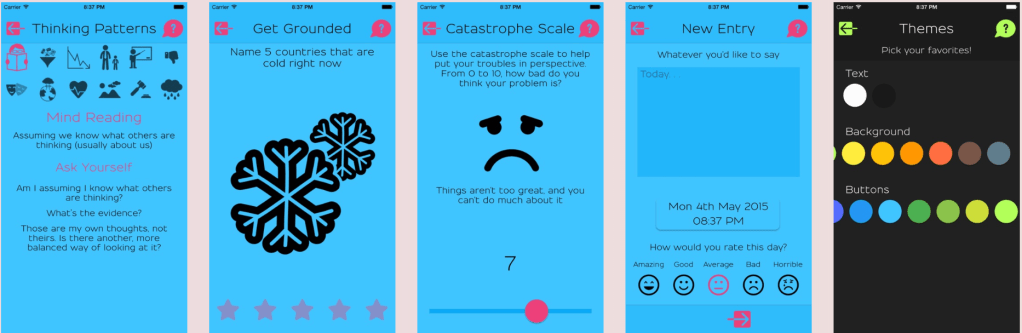
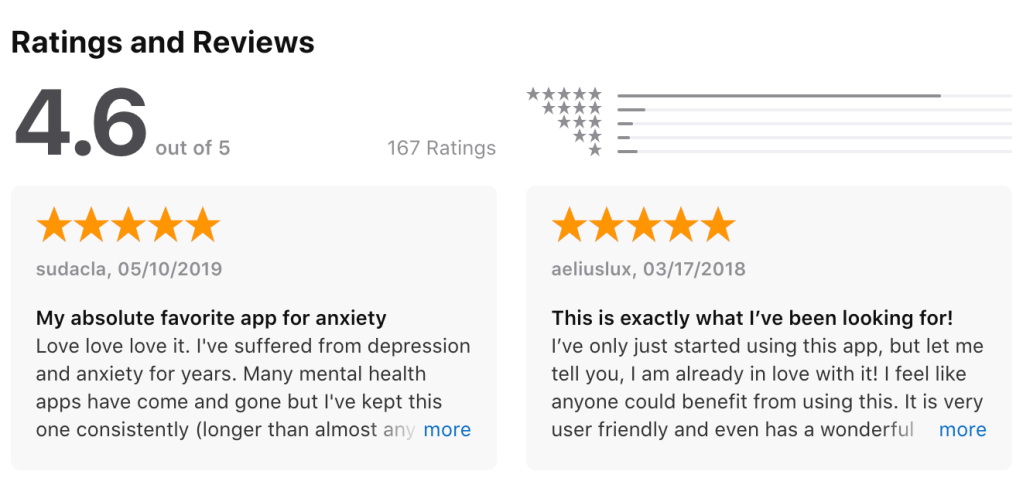
Developed by university student Jackson Tempra, What’s Up is a free app* based off Cognitive Behavioral Therapy (CBT) and Acceptance Commitment Therapy (ACT), both evidence-based treatments for mental illnesses. It contains a positive and negative habit tracker to appreciate your good habits, and acknowledge those that are counterproductive. Cognitive re-structuring can ultimately allow individuals to deviate from negative automatic thoughts, and ameliorate any harmful attitudes regarding mental illnesses. By reversing the reality of self-stigma, we can ultimately encourage (rather than inhibit) individuals to seek help. In addition, the app also includes a comprehensive diary, paired with a feeling scale. Other cool features include a forum to connect with others, breathing techniques, and games to de-stress.

Find it here for iOS (iPhone or iPad compatibility only) and Android.

Moodpath

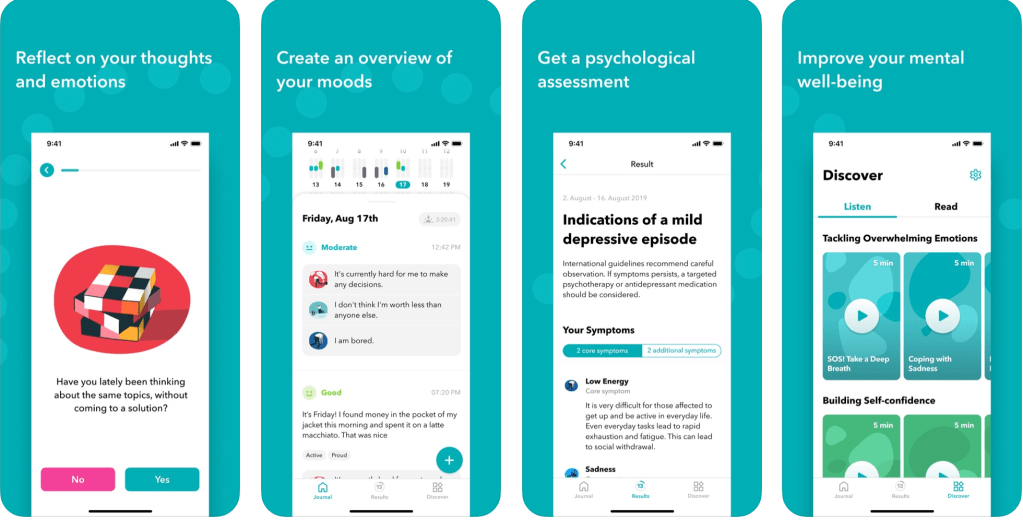
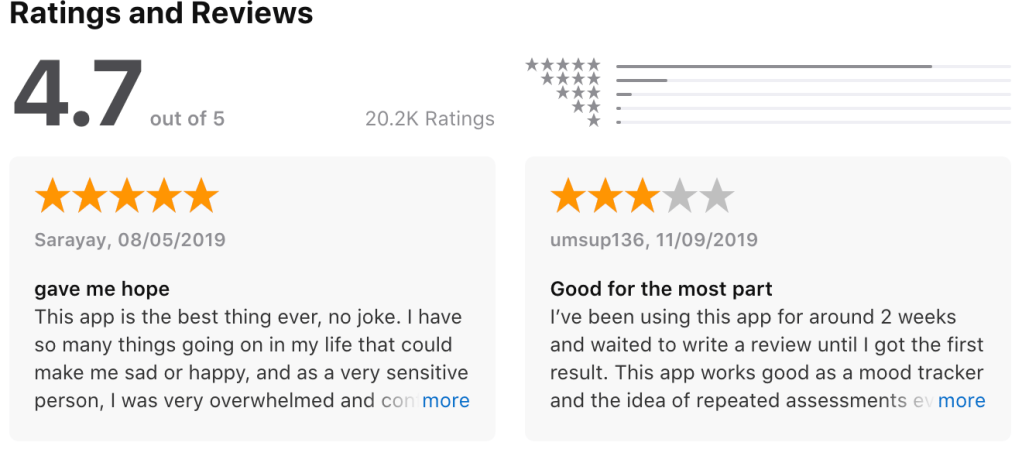
Developed by MindDoc, Moodpath, or rather your ‘mental health companion,’ is a free* mobile app helps those that may be suffering from depression or anxiety to identify and their mood on a day-to-day basis. One of the most popular mental health mobile apps, users answer to questions related to their emotional and physical well-being, track their thoughts in a mood journal, and can select from a library of mindfulness techniques.

The neat thing about Moodpath is the features act as some sort of ‘screening,” where it provides users with an evaluation every two weeks as to what extent symptoms may suggest. The user can then choose to have the app generate a letter to a doctor, making the initial consultation easier for both the affected person and medical professionals. Amazing, right? It makes the initial trepidation of approaching a clinician less daunting.

Find it here for iOS (iPhone and iPad compatibility only) and Android.

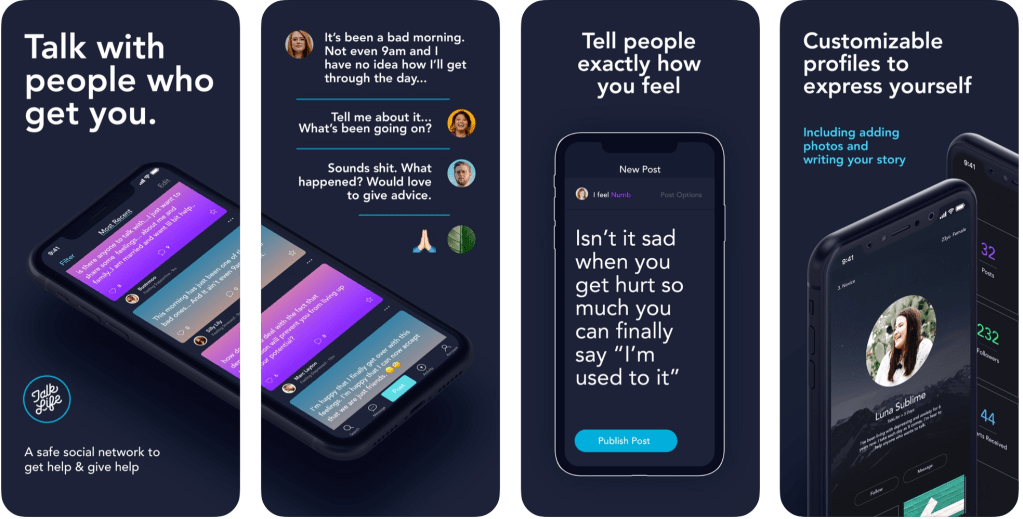
TalkLife

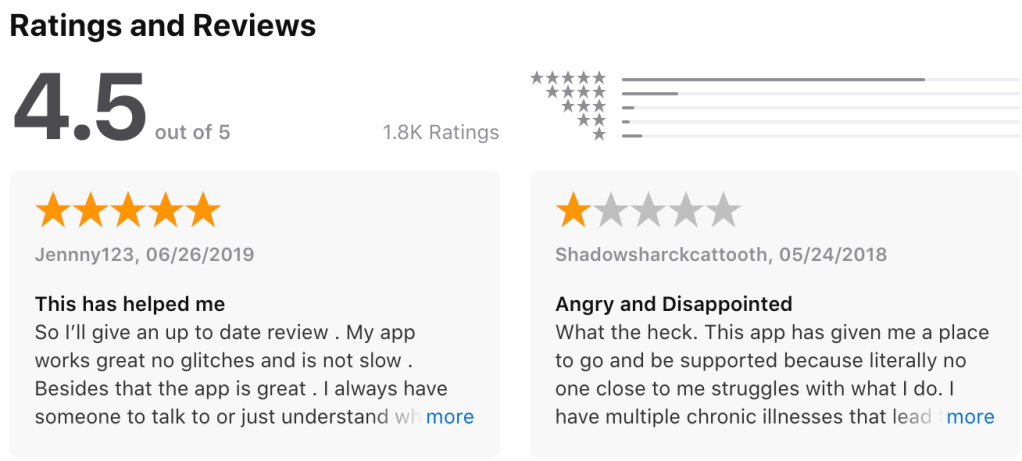
Created by TalkLife Limited Inc., this free app* builds safe communities for individuals to get mental health support at any time and at any place. As I’ve mentioned in a previous blog post, social support and solidarity can be a monumental for someone dealing with a mental illness. The communities don’t discriminate against any particular condition either – forums offer support for depression, anxiety, eating disorders, and so on. The app offers anonymity, confidentiality, and is moderated closely to safeguard the well-being of its users.

Find it here for iOS (iPhone and iPad compatibility only) and Android.

The * denotes that these apps have some optional in-app purchases.

Take a look at this roundup of mental health thoughts, and comment your thoughts below. Whether you found them helpful or not, your feedback provides guidance to others that may be struggling.

So long, friends!

Let’s talk about clarity – dispelling the myths about mental illness

There is a big blue sky just waiting beyond the clouds

MYTH: a widely held but false belief or idea

When you hear “mental health” or “mental illness,” what do you think of?

When you think of someone who is impacted by mental illnesses, what exactly are you picturing?

It’s normal for us to all have different images in mind – like I’ve touched on before, there are many mental illnesses. Presentation of symptoms may or may not be readily apparent, and the severity of them often operates on a continuum. Most importantly, our personal experiences and exposures really define the line between what we know and what we don’t know. So sure, everyone’s got an opinion on mental health, and that’s fine. Do you know what’s not as fine? Forming your opinion based on myths. There are tons of myths out there about mental illness, varying from what it looks or feels like, who gets to suffer from it, and how to treat it. If you’re a regular visitor to my blog, you know how in depth I’ve gotten about finding the facts about mental health.

On that note, it’s time to clear the haziness floating around mental health.

MYTH 1: Mental illnesses are not all that common.

Having a mental illness is more prevalent than you would think. As I’ve mentioned before in my first blog post, a remarkable 1 in 5 people in the U.S. experience mental illness. Even further, 1 in 25 people in the U.S. experience serious mental illness, such as bipolar disorder or schizophrenia. Mental illnesses can affect anyone and everyone – it does not discriminate against factors like age, race, income level, or religion.

MYTH 2: People with mental illnesses are violent and dangerous to society.

Studies have shown that individuals impacted by mental illnesses are actually more prone to being victims of violence. Indeed, a meta-analysis found that 1 in 4 people with mental illnesses will have become victim to violence in a given year. Even worse, the same analysis found that living with a mental illness leaves you four times as likely to experience physical, sexual, or domestic violence.

MYTH 3: Therapy is a joke. Taking a pill is the answer.

Treatment is not black and white. There are different classes of psychiatric medications such as anti-depressants, anti-anxiety medication, mood stabilizers, and and anti-psychotics. Even further, some of these medications can be used off-label and interchangeably. The type of medication you use is dependent on each individual’s unique situation. It isn’t all one-size-fits-all either – some can improve your symptoms, while others can exacerbate them. Nonetheless, most evidence-based treatments for mental illnesses include some form of therapy and medication in combination, and have shown the best outcomes.

MYTH 4: People with mental illnesses can just ‘snap’ out of it. They just don’t want to.

All major psychiatric disorders, like schizophrenia and generalized anxiety disorders, have been proven to have heritable components. For example, bipolar disorder is said to be upwards of 75% inherited by offspring. Parental psychopathology cannot be overlooked here! Genetic vulnerabilities ultimately affect brain structure and function, such as neurotransmitters and neural connectivity. Complex gene by environment interactions also play significant roles in the manifestations of mental illnesses.

MYTH 5: People with mental illnesses need to be institutionalized.

While institutionalization is an unfortunate truth in psychiatric history, media has played a big part in perpetuating this myth. The truth is that very few individuals require long-term hospitalizations, and medical advancements have lead to progressive improvements in treatment.

MYTH 6: You can’t help someone affected by mental illness.

Less than half of those affected by mental illness receive treatment, and friends and family play huge roles in helping someone seek services and initiate treatment. In truth, you can do A LOT. It starts with how you act and how you speak. Here are some steps one can take:

  • Take the time to learn about mental health and one’s mental health condition.
  • Show interest and support in their treatment plan.
  • Treat them with respect, just as you would treat anyone else.
  • Prepare a crisis plan
  • Use person-first language. Don’t imply that they are solely their mental illness.

MYTH 7: If you feel better, you must be cured.

Mental health doesn’t stay the same, and often goes up and down over the course of one’s lifespan. Treatment is often ongoing, and can improve one’s symptoms over time; although, this does not mean the problem goes away. It’s important to continue to your treatment plan, even if you feel ‘better,’ especially if your mental illness is more severe.

MYTH 8: It is impossible to prevent mental illness, so why waste our time?

In myth 4, we talked about how psychiatric disorders have heritability, but it is not certain. There are known environmental risk factors, such as exposure to trauma or violence, that can affect the chances of children, youth, or young adults developing mental illnesses. Research has shown that improving nutrition, housing and education or reducing economic insecurity have proven to reduce the prevalence of mental illness, particularly among those that are at higher risk.

There are so many more myths out there! The National Alliance on Mental Illness (NAMI) has a list of other myths, and I encourage you all to check them out. As a refresher, NAMI is one of the largest mental health organizations, and they centralize their efforts in education and advocacy. Their media presence includes Twitter, so it that’s your jive, you can follow them @NAMICommunicate. Click on the tweet button below to send them your hellos!

Hey there NAMI!

Photo by Ivan Bertolazzi on Pexels.com

Take the first step in learning more about mental health, and spread the truth to others. Help teach others that having a mental illness is nothing to be embarrassed or ashamed about.

If I were to ask you again, what you think of when you hear mental illness or how you visualize someone impacted by one – what would you say?

See you next time!

Mental Health in the Digital Age

Thanks for coming back to Psych Central! If you’re new here, make sure you check out my previous blog posts. The challenges and consequences of stigma in mental illness served as an introduction to this campaign, and gives you the lowdown on how common mental illness is and how important it is to seek help. Last time, we touched based on how fundamental it is to find accurate information on mental health. Most of this information we’re fortunate enough to access on the internet! Adolescents and young adults constitute as the largest group impacted by mental illness, but are also among the most frequent Internet users! This post aims to serve you by giving you some key internet safety tips to follow.

Don’t Be Scared to Report Something As Abusive or Harmful

In a TED Talk by Twitter’s Director of Trust and Safety, Del Harvey, there are multiple different types of destructive behavior on social media – abuse, trolling, spam. As I’ve mentioned in my first blog post, there can be a great deal of stigmatizing and discriminating language that floats around in social media. It isn’t uncommon for people to deem someone living with a mental illness as ‘crazy’ or ‘psycho,’ or insinuating that someone can just ‘get over it,’ or even that their behavior isn’t ‘normal.’

Twitter is transparent with their users, and it’s fairly easy to navigate through your privacy settings. You can report users, tweets, and even hashtags! Content can be marked as sensitive, and this would be especially helpful for issues or experiences that may be triggering. No need to fear retaliation or anything. If you see something that demeans individuals or mental health in general, please report.

On that note – here’s a link describing why our language matters.

Personalization and Content

Another useful TED Talk by Jennifer Golbeck discusses how social media and networking sites, like Facebook, possess detailed information about our clicks and likes in order to predict our behavior. Have you ever noticed that after another one of your random google searches, you miraculously started seeing ads for them plastered over your social media?

Coincidence? Not at all.

This is interesting in a multitude of ways. When living with a mental illness, it is normal to want to seek a community for it. We are hardwired for socialization, and the beauty of media is that it makes it accessible and easy. So connecting with others or even just posts relevant to you can provide some benefit. Finding support in a seemingly marginalized world would surely prevail over living in isolation.

For example, I started following this instagram account about mental health called @asafeplaceinsideyourhead after they popped up on my ‘Discover’ tab. Now, similar accounts have taken over my feed, and I happen to follow tons of other ones just like it! Other apps, like Twitter and Reddit, always try to personalize you experience based on inferences they make about your usage. Please note, that you also have the capacity to control this in your privacy settings no matter what social media you use! This would be useful if you want to see more or less content regarding mental health.

Follow me on other forms of social media!

Since we’ve been talking so much about social media recently, feel free to check out my Vimeo for this campaign and watch some cool videos.

My campaign, Psych Central, is also in Twitter. Follow me at @psychcentral101.

That’s it for this week! See you next time.

Blog Disclosure

I appreciate you stumbling onto my blog, but to be clear, the goal of this campaign is for health promotion purposes only. I do not seek to gain profit from any of my followers. I will not use copyrighted material or plagiarize information as my own without credit to the sources I use.

Stigmatization to sensationalization: what is the truth?

Welcome back to Psych Central! In the previous blog post, we discussed how stigma, whether public or individual, can significantly misrepresent mental illness and what it’s like to live with one. Not only does this affect the way we learn about mental health in general, but also the way we seek help. Given the pervasiveness of media and technology use, it’s important to learn how to navigate through the depths of information out there. In fact, research has found that the public’s primary source of knowledge regarding mental illness comes from the media, such as the news, social media apps, and entertainment. With that in mind, we’ll briefly cover the hits and misses, and why it’s important to seek credible sources that cover mental illness.

For starters – where does one find mental health information?

The National Institute of Mental Health (NIHM), a branch of the of the National Institute of Health (NIH), is the leading federal agency for research on mental health disorders. They have a range of health topics, detailing the clinical research by experts in the field that have uncovered the intricacies behind diagnosis, treatment, and prevention.

The National Alliance on Mental Illness (NAMI) is one of the largest grassroots mental health organizations dedicated to providing advocacy and support to all individuals and their respective families that are affected by mental illness. They have created education programs that are led by peers, families, and providers, and advocate in the public policy domain. Some of the policy issues pertinent to mental health include:

  • Medicaid Expansions and Exclusions
  • Appropriate Mental Health Services in Schools
  • Mental Health Screenings
  • Insanity Defense

If you’re unsure how to find treatment or support, you can contact the NAMI Helpline: 1-800-950-6264

NAMI also has an easily accessible online knowledge and resource center that has an extensive library with commonly asked questions.

Psychology Today, a magazine owned by the American Psychological Association, covers current affairs in psychology research and topics written. Their directory includes psychologists, psychiatrists, medical doctors, and more. They are dedicated in linking readers to therapists, health professionals, and treatment centers.

The misses – major issues in entertainment and the media

Television

The manner in which fictional characters’ experiences and feelings are shown on television have the ability to impact the way in which people understand and react to similar circumstances. This deems true for mental illness depicted on screen, and it can affect the way people cope with such conditions. In many instances, TV shows or movies can insinuate that people impacted by a mental health condition are ‘dangerous,’ ‘different,’ or ‘crazy.’ Moreover, mental illnesses are seen as a moral flaw or defining characteristic for on-screen characters, rather than relaying that it is a medical condition.

Social Media

Social media is often ingrained into our daily lives. When it comes to learning and talking about mental illness, it is a constant balance of good or bad. For example, there is a subreddit group r/mentalhealth on the platform Reddit with over 245,000 members that share personal accounts and experiences. While these groups may be good for solidarity and advocacy, it would not necessarily be the best avenue to seek help or find resources. It’s important to remember that each person may experience a particular condition or respond to treatment differently. As a general rule of thumb:

“X, Y, or Z may work for you, but may not work for me.”

Digital Therapy Apps

There is a plethora of ‘therapy’ or ‘self-care’ apps that imply being able to improve or manage symptoms of mental illnesses. Research has found that they are NOT effective in doing so, and should only be used to offer additional support in conjunction to evidence-based treatment performed by a clinician. In fact, only 1.4% of mental health apps have actually backed their claims with credible and reliable evidence.

Wrapping Things Up

With this digital age, we can admire the convenience of being able to find and access information online anywhere and at anytime. But it’s equally important to recognize some pitfalls that have come with this. So no matter the self-care app or what social media is telling you, professional mental health treatment is a necessary imperative. Remember – getting better means actively working towards it. We shouldn’t make our decisions regarding care based on what others post.

Awareness is essential. How we report the experiences of individuals dealing with mental health challenges deserves a more scrutinizing eye, and we can all work together to reduce any stigma around these conditions.

Introduce Yourself (Example Post)

This is an example post, originally published as part of Blogging University. Enroll in one of our ten programs, and start your blog right.

You’re going to publish a post today. Don’t worry about how your blog looks. Don’t worry if you haven’t given it a name yet, or you’re feeling overwhelmed. Just click the “New Post” button, and tell us why you’re here.

Why do this?

  • Because it gives new readers context. What are you about? Why should they read your blog?
  • Because it will help you focus you own ideas about your blog and what you’d like to do with it.

The post can be short or long, a personal intro to your life or a bloggy mission statement, a manifesto for the future or a simple outline of your the types of things you hope to publish.

To help you get started, here are a few questions:

  • Why are you blogging publicly, rather than keeping a personal journal?
  • What topics do you think you’ll write about?
  • Who would you love to connect with via your blog?
  • If you blog successfully throughout the next year, what would you hope to have accomplished?

You’re not locked into any of this; one of the wonderful things about blogs is how they constantly evolve as we learn, grow, and interact with one another — but it’s good to know where and why you started, and articulating your goals may just give you a few other post ideas.

Can’t think how to get started? Just write the first thing that pops into your head. Anne Lamott, author of a book on writing we love, says that you need to give yourself permission to write a “crappy first draft”. Anne makes a great point — just start writing, and worry about editing it later.

When you’re ready to publish, give your post three to five tags that describe your blog’s focus — writing, photography, fiction, parenting, food, cars, movies, sports, whatever. These tags will help others who care about your topics find you in the Reader. Make sure one of the tags is “zerotohero,” so other new bloggers can find you, too.

Design a site like this with WordPress.com
Get started